London, February 5th 2026 – Residence of the Ambassador of Spain in London
On February 5th, the event “Improvements in Gender Gap in Academia: Learning Lessons” was held at the Residence of the Ambassador of Spain in London, in celebration of the International Day of Women and Girls in Science. The gathering brought together researchers, academics, policy makers, and representatives from funding agencies to reflect on progress made in gender equality within academia and the challenges that remain.
The event began with the presentation of the White Paper on Gender Policies in Science and Academia, a report led by the Research and Gender Committee of the Network of Associations of Spanish Researchers and Scientists Abroad (RAICEX), where the Wom=n Equity and Research committee of the Society of Spanish Researchers in the United Kingdom (SRUK/CERU) completed the analysis and drew conclusions on the gender situation in the British academia. This document analyses the gender policies implemented across 14 countries and identifies key stages in academic careers where gender inequalities persist, while also highlighting good practices and lessons learnt to help reduce the gender gap in science.
The event opened with welcoming remarks by the Ambassador of Spain to the United Kingdom of Great Britain and Northern Ireland, Ambassador Emma Aparici Vázquez de Parga, who emphasized the importance of gender equality in the political sphere. This was followed by an inspiring presentation by the Secretary General for Research at the Spanish Ministry of Science, Innovation and Universities, Dr. Eva Ortega-Paíno, who highlighted the need to promote public policies aimed at overcoming the gender gap. Subsequently, Dr. Fayna García Martín, coordinator of the White Paper, presented the most significant gender data in Spanish academia. During this presentation, we also had the valuable opportunity to learn about the work carried out by Dr. María José Martínez Bravo in this study, including the various challenges and the results of her research in the UK context.
Following this opening, a round table discussion took place with the participation of:
- General Secretary for Research of the Ministry of Science, Innovation and Universities of Spain – Dra Eva Ortega-Paíno
- Associate Director, Equitable Research Practice from Wellcome Trust – Prof Bella Starling
- Chair of the Athena Swan Governance Committee – Prof Sara Mole
- Representative from the Global Research and Science Network – Dr Tania Ramos Moreno
- Champion in Gender Equality in Research in Academia – Prof Iseult Lynch
- Speaker and coordinator of the White Paper on Gender Policies in Science and Academia – Dr Fayna García Martín
- Moderator – Dr María José Martínez Bravo
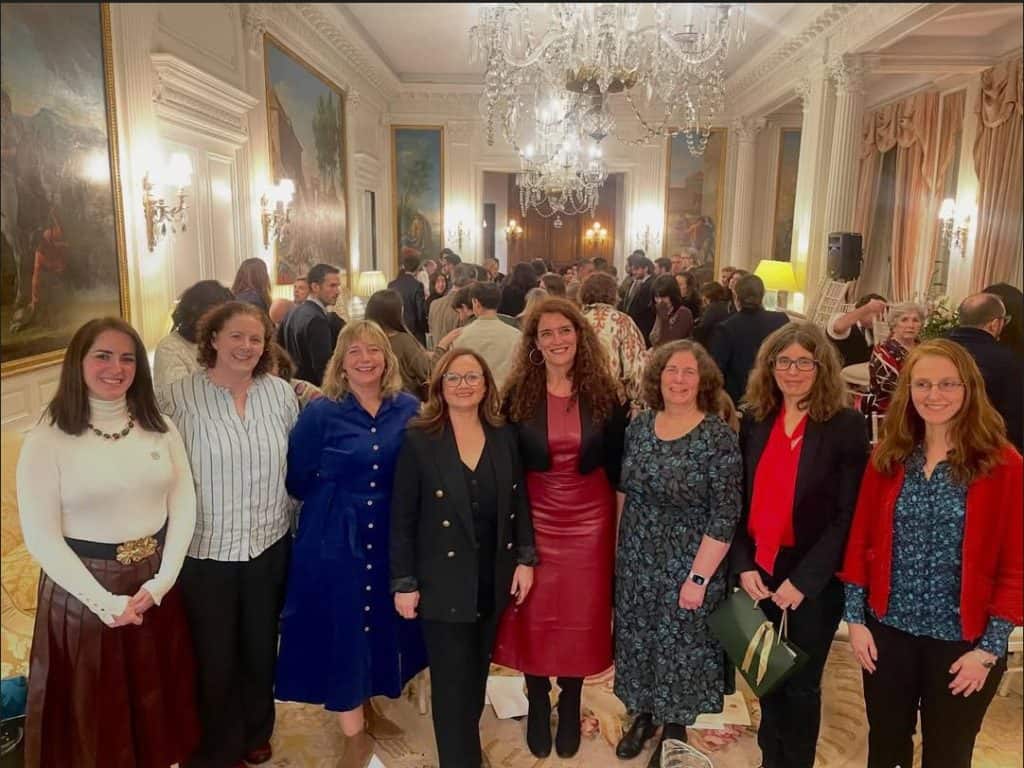
During this session, we had the valuable opportunity to learn how evidence-based policies and institutional changes can contribute to creating a more inclusive and equitable academic environment. During the roundtable discussion, the participants highlighted the importance of collaboration between institutions, governments, and the scientific community in order to achieve progress in gender equality within academia. Dr Eva Ortega Paíno emphasized that “unity builds Science, but it also builds equality,” a nod to the RAICEX motto, adding that “it is necessary to implement gender-balance measures while also taking cultural differences into account”.
As the discussion continued, the speakers shared several key reflections. Dr Fayna Garcia Martin focused on structural barriers that remain deeply embedded in academic careers, particularly in senior leadership positions within academia. In this context, Prof Sara Mole highlighted the need for universities to explicitly recognise the institutional effort involved in participating in initiatives such as Athena Swan, which assess impact across areas as broad as research, teaching, and institutional citizenship. From a funding perspective, Prof Bella Starling explained that Wellcome Trust requires clear assurances regarding gender equality and reviews whether internal processes may hinder applications from women, also stressing the importance of acting at early stages through inspiration and outreach programmes. It was also noted that breaking the glass ceiling requires moving away from viewing scientific careers as linear trajectories and instead valuing alternative paths that are equally valid and capable of driving change. For her part, Dr Tania Ramos Moreno stressed that structural changes must be sensitive to diverse realities, such as migration and gender, while Prof Iseult Lynch concluded by underscoring that support from senior leadership is crucial and that gender equality is a collective responsibility, not solely a women’s issue. The event concluded with thanks to the speakers and attendees.
This event reaffirmed SRUK/CERU’s commitment to promoting equality, diversity, and inclusion in science, as well as supporting initiatives that foster the professional development of women and other historically underrepresented groups in academia.