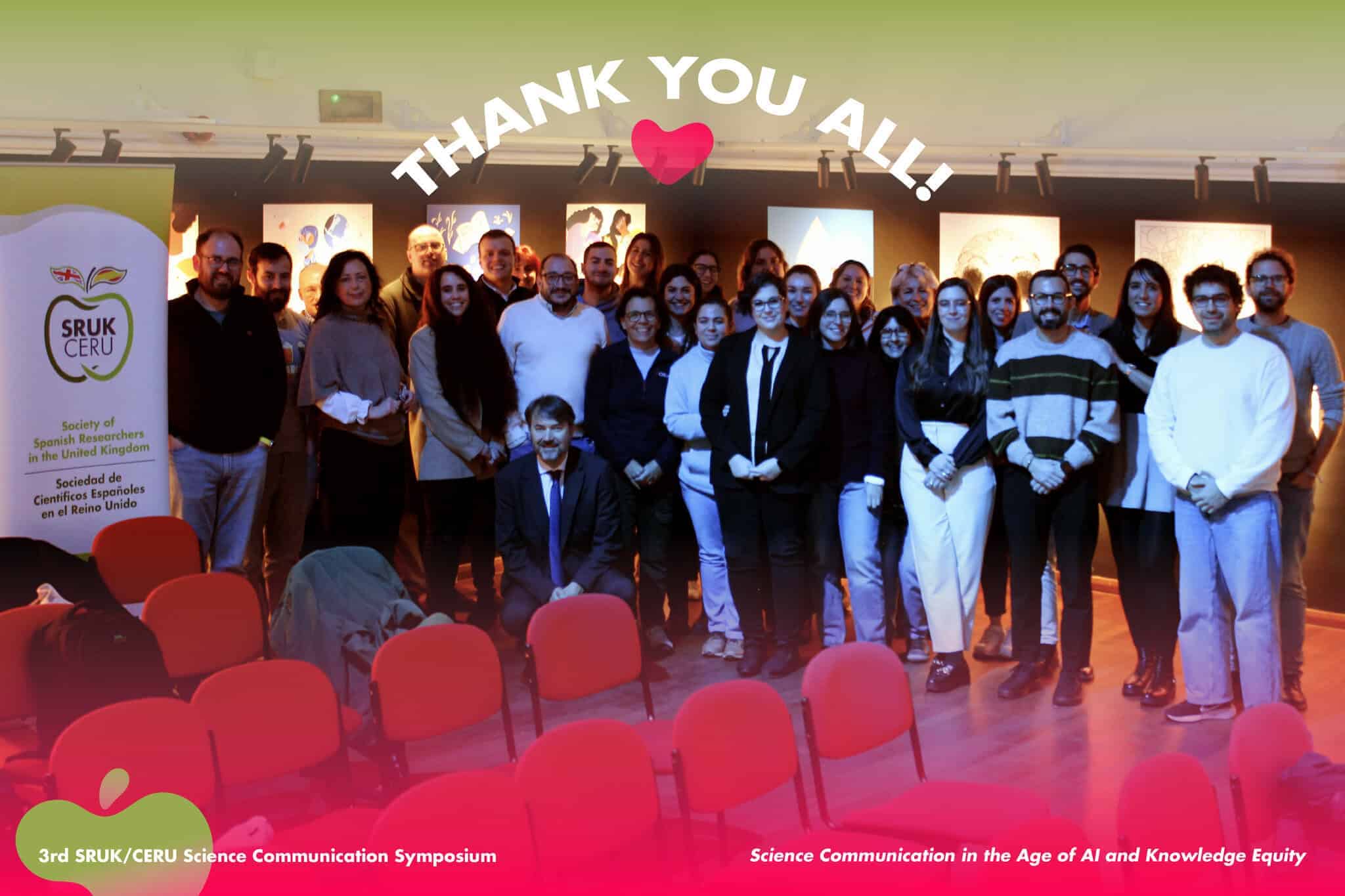
- After the success of the two previous editions, SRUK/CERU celebrated the third edition of the Science Communication Symposium at the Instituto Cervantes Manchester during the 25th and 26th of October 2025.
- More than 40 people attended the event, which highlighted the importance of sharing scientific information fairly and clearly with everyone, utilising new AI tools and inclusive approaches.
Manchester, 28th October 2025. The 3rd SRUK/CERU Science Communication Symposium was held in the Cervantes Institute in Manchester during the 25th and 26th of October 2025. Led by Dr Marta Dominguez Prieto, head of the SRUK/CERU Midlands Constituency, Dr Carlos Soler Montes, president of SRUK/CERU, Dr Sara Franco Ortega, vice-president of SRUK/CERU, and in collaboration with ELEUK and Agata Communications, the event brought together researchers, communicators, and professionals passionate about bridging the gap between science and linguistics, AI and society.
The event sponsored by the Embassy of Spain in London through its office for Cultural and Scientific Affairs, the General Consulate of Spain in Manchester, the Cervantes Institute in Manchester, Spanish Foundation for Science and Technology (FECYT), the Ramon Areces Foundation, Agata Communications, ELEUK and the EU-funded project Connects-UK, opened with the speeches of the Director of the Cervantes Institute in Manchester, Dr Martín López-Vega and the Consul General of Spain in Manchester, Ambassador Alejandro Polanco Mata.
The first keynote speaker of the Symposium, Prof Estrella Montolío Durán from the University of Barcelona (Spain), explained tools and linguistic concepts that can help make the communication clearer: “Metaphors are an effective tool for scientific communication, as they help make complex and abstract concepts more accessible to non-specialist audiences.”. The second keynote speaker, Prof Antonio Martínez Arboleda, from the University of Leeds, reflected on how generative AI can make access to knowledge fairer and more accessible.
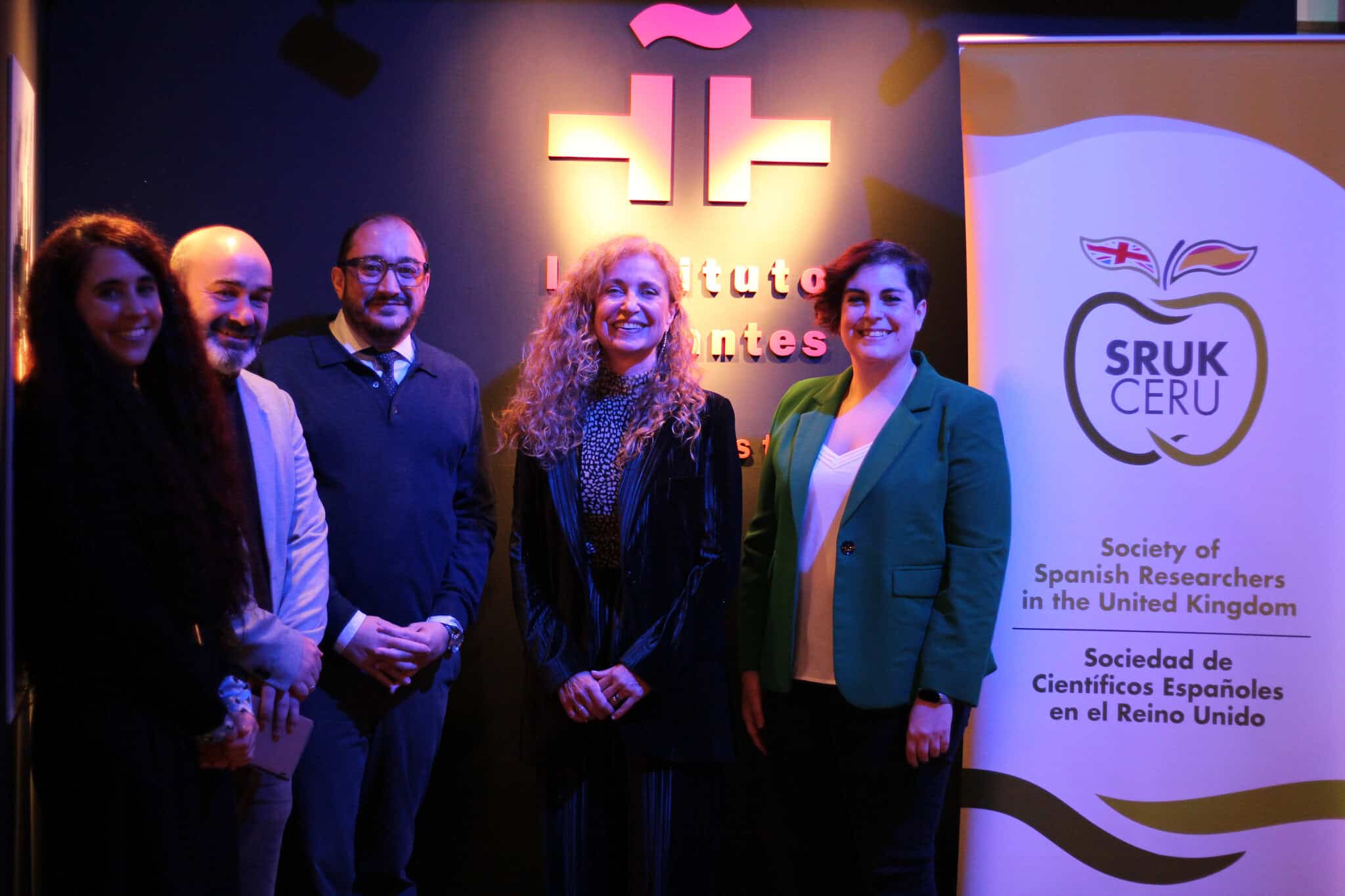
In the afternoon, Dr Lourdes Barquín Sanmartín, from the University of Reading and director of the SRUK/CERU Online Department, shared her experience in innovative uses of AI in multilingual education, highlighting how previously known languages can help students learn others. The day ended with a round table focused on “Communications in the context of learned societies and professional associations in the UK”, chaired by Dr Sara Franco Ortega, vice-president of SRUK/CERU. The panellists, Dr Inés Gutiérrez González, from Keele University and representing the Association of Hispanists in Great Britain and Ireland, Dr Alba del Pozo García, from the University of Leeds and representing ELEUK, and Dr Javier Pardo Diaz, on behalf of SRUK/CERU, the Network of Associations of Spanish Researchers and Scientists Abroad (RAICEX) and CONNECTS-UK, a project led by multiple scientific diasporas, shared their experience on how associations can help their members during their communication strategies and reaching a broader audience.
On the second day, the third keynote speaker of the Symposium, Dr Francisco Puentes, Deputy Director of the Spanish Agency for the Supervision of Artificial Intelligence (AESIA), explained Spain’s AI policy and regulatory framework, ensuring responsible and transparent AI governance. Followed by Prof. Esther Nieto Moreno de Diezmas, from the University of Castilla-La Mancha, who emphasised the importance of outreach activities as a social endeavour to “share knowledge and science and create a more informed and critical society”.
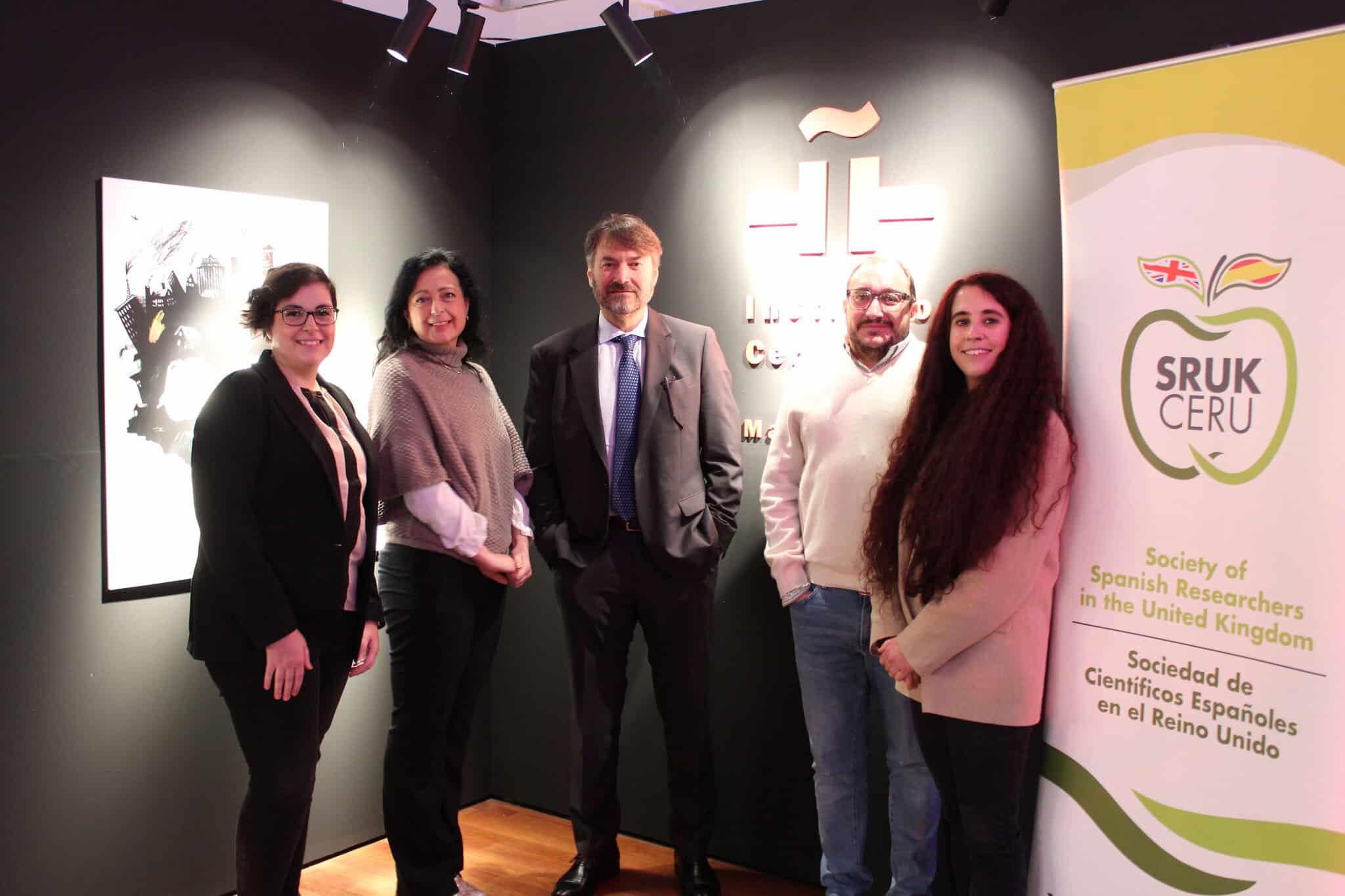
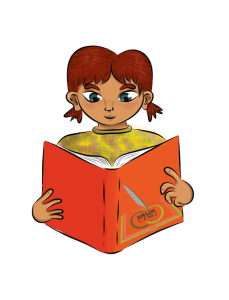
The Symposium ended with one of the most successful SRUK/CERU outreach activities, Ciéncia-me un Cuento, a project that uses storytelling to engage children with science and nurture curiosity through imagination. Dr Beatriz Monterde Martínez, director of the SRUK/CERU Outreach Department, announced the winners of the last edition, which was, for the first time, open to stories in five languages: English, Spanish, Catalan, Galician, and Basque.
The 3rd SRUK/CERU Science Communication Symposium concluded with great success, establishing itself as one of the main Science Communication events for the Spanish researchers’ community in the UK.