- The event focused on three key themes in cancer research: cachexia, the tumour microenvironment and cutting-edge technologies.
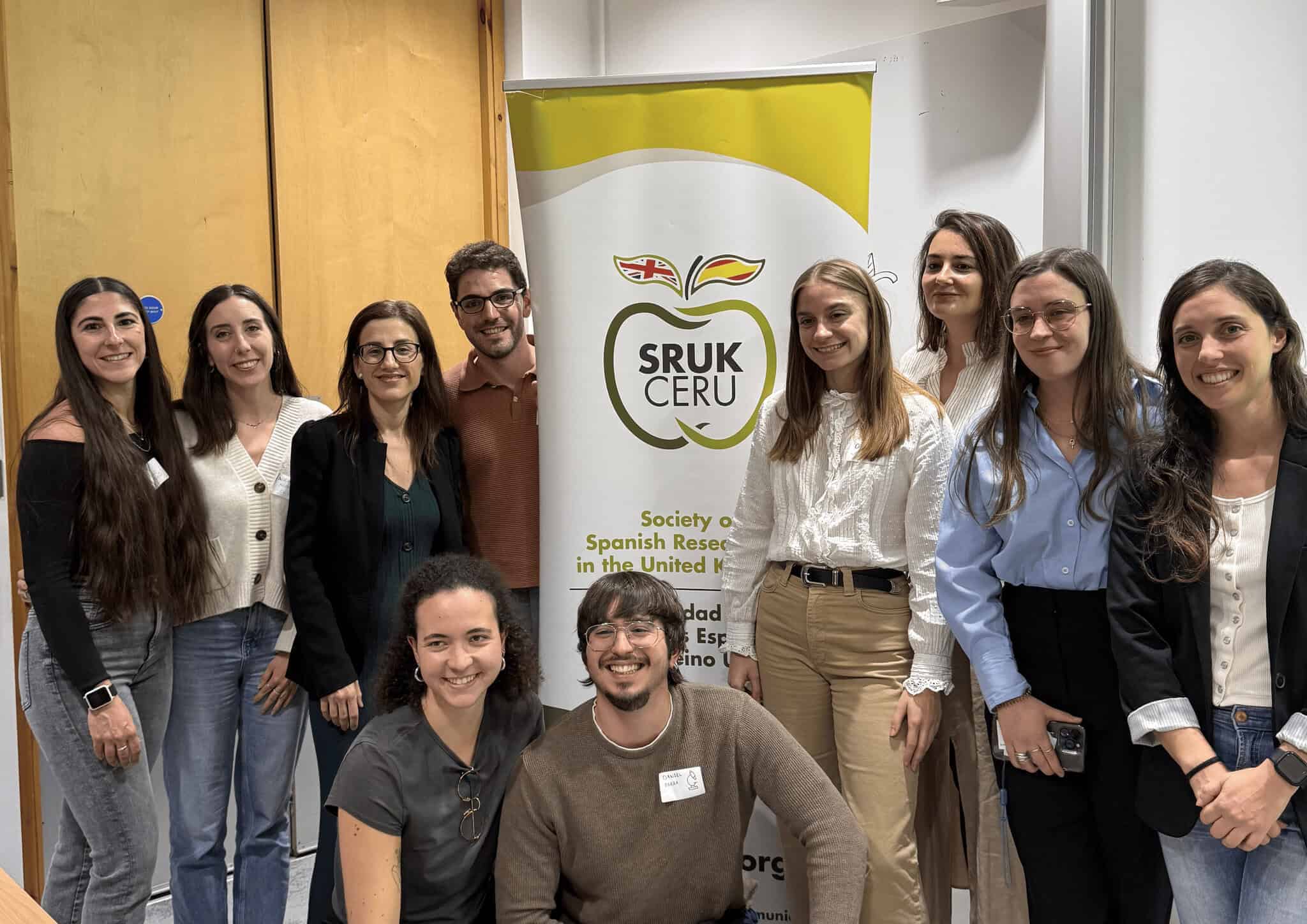
- More than 70 people attended the event celebrated at University College London (UCL) on the 18th of October 2025.
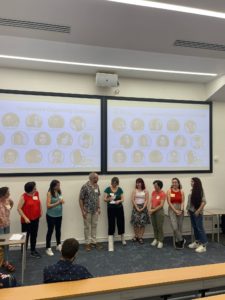
- Three prizes were awarded to early-career researchers (ECRs) who presented flash talks about their research, thanks to our generous sponsors.
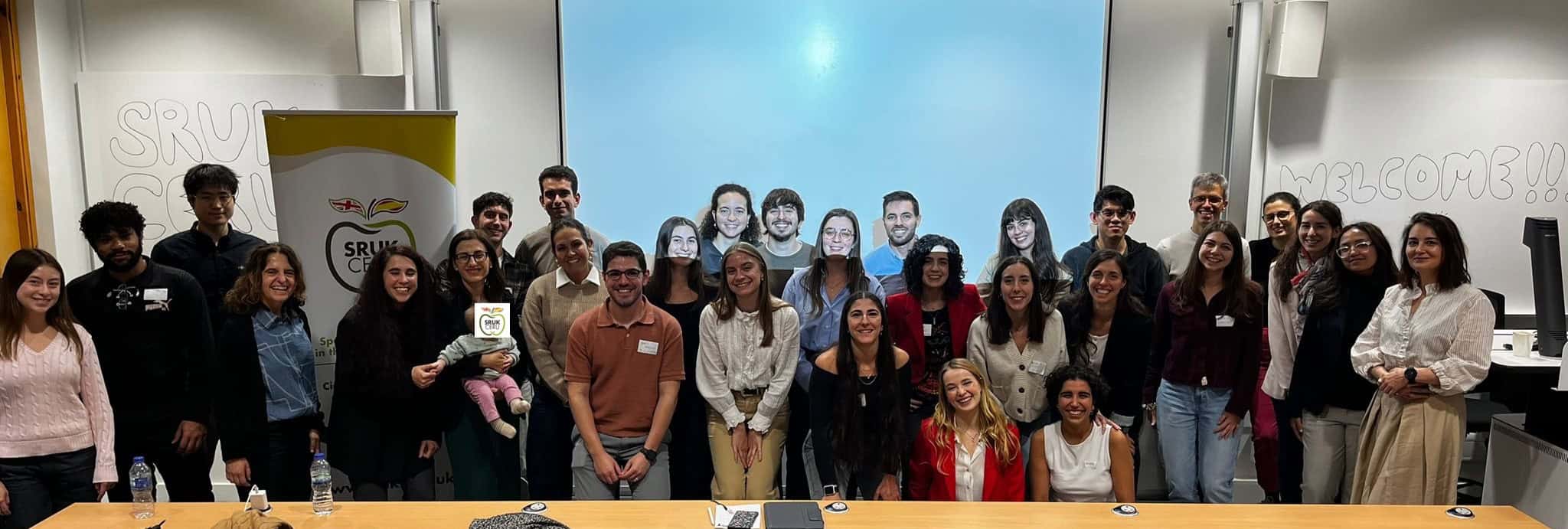
London, 18th October 2025.
The SRUK/CERU cancer committee celebrated its fourth networking seminar event titled “Niched, Networking and Next-Gen”. The event started with a warm welcome by the co-chairs of the committee: Dr. Ignacio Rodriguez and Dr. Pilar Acedo, highlighting some of the initiatives the SRUK/CERU cancer committee has organised over the past years, opportunities for SRUK/CERU members, and thanking the sponsors of the event, which include the Ramón Areces Foundation, the Spanish Foundation for Science and Technology (FECYT), the Office for Cultural and Scientific Affairs (OCSA) of the Embassy of Spain in the United Kingdom, the CONNECTS-UK project funded by the European Commission, CRIS Cancer Foundation, the Spanish Association Against Cancer (AECC), the Biochemical Society and the Company of Biologists.
The event started with a session dedicated to cachexia. Dr Giulia Biffi (Cancer Research UK Cambridge Institute) summarised key findings obtained using pancreatic cancer mouse models, where mice with severe cachexia, or a situation where the body loses a lot of weight and muscle because of illness, died faster while having a similar primary tumour burden. The second speaker of the day, Megan Bowers (King’s College London), presented multicomponent interventions, such as diet and physical therapies, against cachexia and their impact on the quality of life of patients.
The cachexia session was followed by a talk from one of our sponsors, CRIS Cancer foundation, given by Elena Muyo, who highlighted the 64M funding raised between their headquarters in Spain, France and the UK, entirely dedicated to funding research projects and brilliant scientists. She emphasised the role of CRIS Cancer in supporting scientists in their research at all career stages and emerging talent throughout its generous funding opportunities.
The second session of the day focused on the tumour microenvironment and included two speakers from the Francis Crick Institute. Dr Paola Peinado, who explained how sensory nerves around tumours can affect how cancer develops and spreads, highlighting the role of sensory nerves in the tumour microenvironment and how it affects cancer development. The second speaker of the session, Dr Miriam Molina, showed how a key cancer gene, KRAS, works together with its surroundings in lung cancer, opening possibilities for new treatments.
After a productive networking lunch, our second sponsor, the Spanish Association Against Cancer (Asociación Española Contra el Cáncer, AECC), represented by Dr Marina Salmon, highlighted the organisation’s role in advancing cancer research. AECC is committed to funding innovative scientific projects to improve patients’ lives and survival outcomes. Through a wide range of funding opportunities, the association focuses on fostering and retaining research talent, driving innovation, and supporting the creation of multidisciplinary teams, all united by a common goal: building a future without cancer.
Six incredible early-career scientists staged the Flash Talk session. Participants presented cutting-edge projects spanning radiotherapy, immunotherapy, and novel therapeutic strategies. Thanks to the generous support of our sponsors, three prizes were awarded to Andrea de Castro (The Francis Crick Institute) for her work on enhancing KRAS-mutant lung cancer therapies, Angelica Blotto (University of Cambridge and University College London) for advancing photochemical internalisation approaches in pancreatic cancer, and Ana S. de la Rosa Herencia (University of Córdoba) for her research unveiling new therapeutic vulnerabilities in oligodendroglioma.
The last session of the day was dedicated to cutting-edge technologies. The first speaker, Dr Pau Creixell (Cancer Research UK Cambridge Institute), presented the ORACLE method, integrating computational and experimental approaches to understand how changes in proteins can influence their interactions during cancer. Finally, Dr Oscar Maiques (Barts Cancer Institute) closed our event by presenting how the area around a tumour is not the same everywhere — at the edges, the tissue is denser and more structured, helping cancer cells travel and form new tumours elsewhere.
The SRUK/CERU Cancer Committee thanks all participants, speakers, and researchers who contributed their time, knowledge, and passion to make this event successful. Also, the committee expresses its appreciation to the sponsors for their generous support and commitment to advancing cancer research. Their continued investment enables key funding opportunities that empower scientists to explore new frontiers in cancer prevention, diagnosis, and treatment. Together, we are building a stronger, more hopeful future in the fight against cancer.