The Society of Spanish Researchers in the UK (SRUK/CERU) organised its 13th International Symposium in Oxford, themed “Collaborate to Innovate”, bringing together around 130 researchers and professionals to explore how collaboration across disciplines and sectors drives innovation.
Renowned speakers from academia, industry, and science communication shared their expertise on interdisciplinary collaboration, innovation, and the future of research. Through book discussions, keynote lectures, roundtable discussions, workshops, and career-focused sessions, they highlighted the importance of building partnerships across disciplines and sectors to tackle today’s scientific challenges.
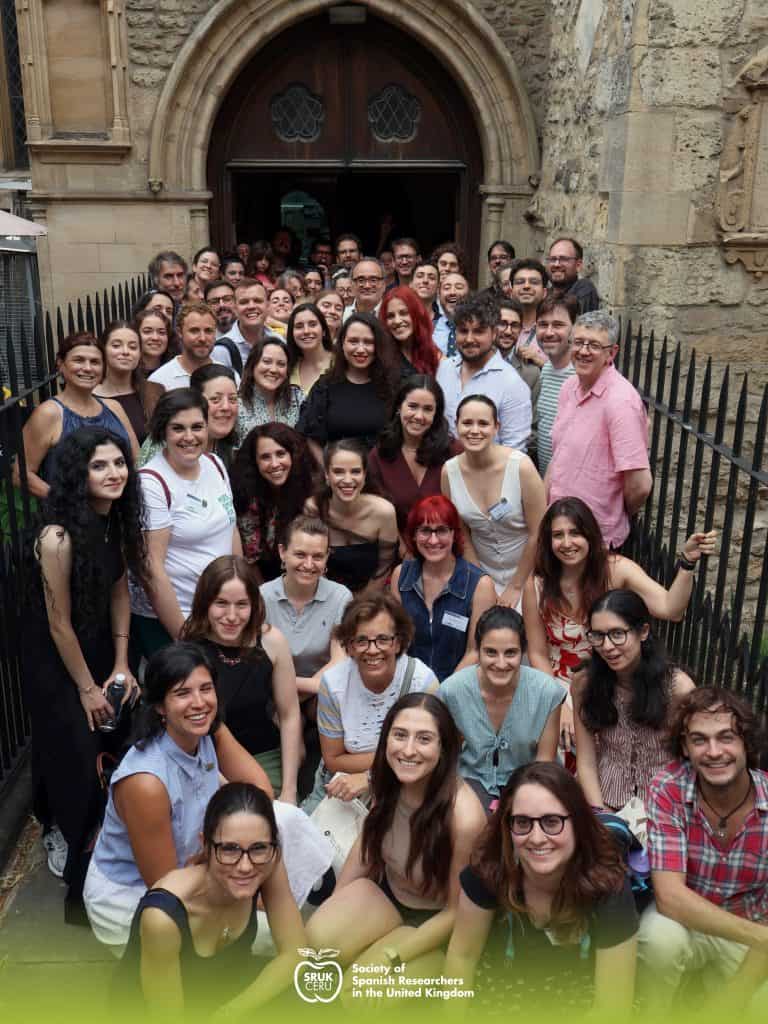
Oxford, 29th June 2026. The Society of Spanish Researchers in the United Kingdom (SRUK/CERU) hosted its 13th International Symposium this weekend under the theme “Collaborate to Innovate”, exploring how collaboration across disciplines and sectors drives innovation. The 13th SRUK/CERU International Symposium was chaired by Dr Ana Aragón González (University of Oxford) and welcomed approximately 130 attendees.
On Friday, the event began with a satellite event featuring the presentation of the book Seis problemas que la ciencia no puede resolver by Prof Sonia Contera. In the afternoon, the symposium officially opened at the Oxford University Museum of Natural History with welcome addresses from HE Ms Emma Aparici Vázquez de Parga, Ambassador of Spain to the United Kingdom; Dr Eva Ortega Paíno, Secretary General for Research, Ministry of Science, Innovation and Universities, Spain; Prof Constantin Coussios, Pro-Vice-Chancellor for Innovation, University of Oxford; Mr Víctor Ugarte Farrerons, Director of Instituto Cervantes London; and Dr Carlos Soler Montes, President of SRUK/CERU.
The first keynote speaker was Dr Sara García Alonso, research scientist at the Spanish National Cancer Research Centre (CNIO), member of the European Space Agency (ESA) Astronaut Reserve, and one of Spain’s most influential women in technology. Sara shared her dual experience as a researcher studying proteins involved in lung and pancreatic adenocarcinomas and as an ESA reserve astronaut, reflecting on how she balances both careers.
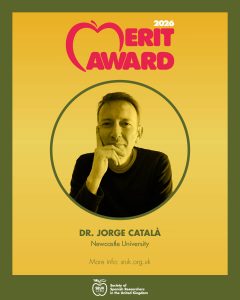
On Saturday, the 2026 SRUK/CERU Merit Award was presented to Dr Jorge Català in recognition of his internationally recognised research in Hispanic cultural studies at Newcastle University. During his keynote lecture, he demonstrated how comics and graphic narratives can become powerful tools for communicating research beyond traditional academic audiences, highlighting that “verbal is a linear message, but visual presents itself all at once.”
The afternoon roundtable, “Partnerships that Drive Innovation”, chaired by Dr Sara Alvira de Celis (University of Bristol), brought together Dr Mabel Sánchez Barrioluengo (University of Manchester), José Jiménez Garrido (PlanetariumGO!), Jorge Gárriz Fernández (Instituto Cervantes London), and Rodrigo Valgañón Domínguez (AVS URA Thrusters). The discussion offered diverse perspectives from academia, industry, entrepreneurship, culture, and innovation, exploring how cross-sector collaborations emerge, the impact they generate, and the importance of developing an open mindset to foster a culture of innovation.
The day concluded with the SRUK/CERU General Assembly, during which the new Executive Committee was announced.
On Sunday, the careers seminar “Academia and Industry” was delivered by SRUK/CERU member Dr Nerea Borreguero Muñoz, who discussed the similarities and differences between these two sectors of the research ecosystem. Dr Marta Domínguez-Prieto, Senior Lecturer in Pharmacology at the Leicester School of Pharmacy, De Montfort University, and Pharmacology Group Lead within the LIPHI Research Institute, presented how emerging technologies are helping researchers better understand the mechanisms underlying neurodegenerative diseases.
Candela Antón de Vez presented “Stories by the Fire: Narratives as Allies of Science Communication”, exploring the role of storytelling in engaging audiences with science, while Dr Emma Lalande led the workshop “Communication in Collaboration”, providing participants with practical tools to strengthen collaborative communication.
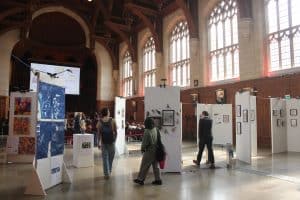
The Symposium also featured short talks, poster presentations, and Pint of Science flash talks by selected SRUK/CERU members, showcasing the breadth and multidisciplinary nature of research carried out by Spanish researchers across the UK.
Attendees also enjoyed an architectural walking tour of Oxford and a celestial-inspired concert, sponsored by Instituto Cervantes London and performed by pianist Helen Glaisher-Hernández and soprano Lorena Paz Nieto. The programme, entitled Miraba la noche el alma, explored the cosmos through music by Hispanic composers spanning different centuries.
The Symposium reaffirmed SRUK/CERU’s commitment to fostering collaboration between academia, industry, institutions, and society, creating opportunities for knowledge exchange, innovation, and the professional development of the Spanish research community in the United Kingdom.
We thank our sponsors for their generous support: Fundación Ramón Areces (Spain), the Galician Innovation Agency (GAIN) (Spain), Fundación San Millán de la Cogolla (Spain), Instituto Cervantes London, and PlanetariumGO!, as well as the University of Oxford and the Kavli Institute for Nanoscience Discovery for their institutional support.